Widget by:Get Widget

Top Stories: Are aliens among us? These researchers say it's a serious question.

A group of researchers wants to make the study of UFOs an academic discipline. Experts call them unidentified anomalous phenomena (or UAPs). ͏‌ ͏‌ ͏‌ ͏‌ ͏‌ ͏‌ ͏‌ ͏‌ ͏‌ ͏‌ ͏‌ ͏‌ ͏‌ ͏‌ ͏‌ ͏‌ ͏‌ ͏‌ ͏‌ ͏‌ ͏‌ ͏‌ ͏‌ ͏‌ ͏‌ ͏‌ ͏‌ ͏‌ ͏‌ ͏‌ ͏‌ ͏‌ ͏‌ ͏‌ ͏‌ ͏‌ ͏‌ ͏‌ ͏‌ ͏‌ ͏‌ ͏‌ ͏‌ ͏‌ ͏‌ ͏‌ ͏‌ ͏‌ ͏‌ ͏‌ ͏‌ ͏‌ ͏‌ ͏‌ ͏‌ ͏‌ ͏‌ ͏‌ ͏‌ ͏‌ ͏‌ ͏‌ ͏‌ ͏‌ ͏‌ ͏‌ ͏‌ ͏‌ ͏‌ ͏‌ ͏‌ ͏‌ ͏‌ ͏‌ ͏‌ ͏‌ ͏‌ ͏‌ ͏‌ ͏‌ ͏‌ ͏‌ ͏‌ ͏‌ ͏‌ ͏‌ ͏‌ ͏‌  ͏‌ ͏‌ ͏‌ ͏‌ ͏‌ ͏‌ ͏‌ ͏‌ ͏‌ ͏‌ ͏‌ ͏‌ ͏‌ ͏‌ ͏‌ ͏‌ ͏‌ ͏‌ ͏‌ ͏‌ ͏‌ ͏‌ ͏‌ ͏‌ ͏‌ ͏‌ ͏‌ ͏‌ ͏‌ ͏‌ ͏‌ ͏‌ ͏‌ ͏‌ ͏‌ ͏‌ ͏‌ ͏‌ ͏‌ ͏‌ ͏‌ ͏‌ ͏‌ ͏‌ ͏‌ ͏‌ ͏‌ ͏‌ ͏‌ ͏‌ ͏‌ ͏‌ ͏‌ ͏‌ ͏‌ ͏‌ ͏‌ ͏‌ ͏‌ ͏‌ ͏‌ ͏‌ ͏‌ ͏‌ ͏‌ ͏‌ ͏‌ ͏‌ ͏‌ ͏‌ ͏‌ ͏‌ ͏‌ ͏‌ ͏‌ ͏‌ ͏‌ ͏‌ 
Read in browser

     Sat Dec 6 2025

 
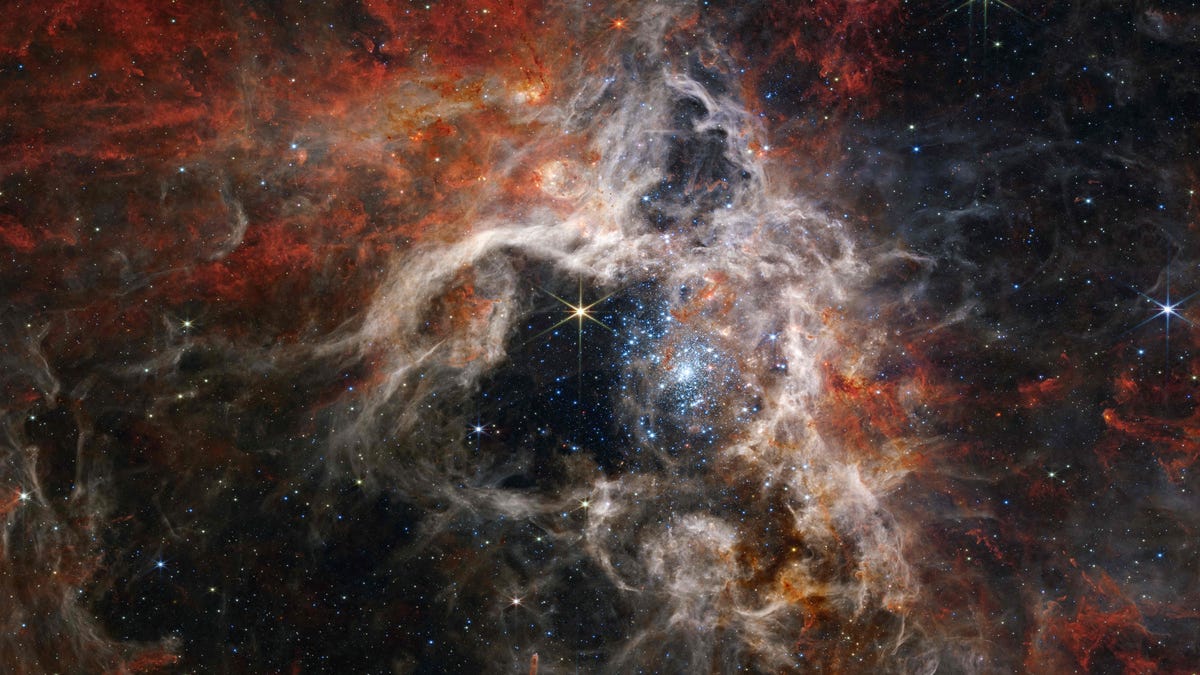
This handout image released by ESA, NASA, CSA, Space Telescope Science Institute (STScI) shows a mosaic image stretching 340 light-years across, captured with the James Webb Space Telescopes Near-Infrared Camera (NIRCam), displaying the Tarantula Nebula star-forming region in a new light, including tens of thousands of never-before-seen young stars that were previously shrouded in cosmic dust. The most active region appears to sparkle with massive young stars, appearing pale blue. Scattered   among them are still-embedded stars, appearing red, yet to emerge from the dusty cocoon of the nebula. NIRCam is able to detect these dust-enshrouded stars thanks to its unprecedented resolution at near-infrared wavelengths. To the upper left of the cluster of young stars, and the top of the nebulas cavity, an older star prominently displays NIRCams distinctive eight diffraction spikes, an artifact of the telescopes structure. Following the top central spike of this star upward, it almost points to a distinctive bubble in the cloud. Young stars still surrounded by dusty material are blowing this bubble, beginning to carve out their own cavity. Astronomers used two of Webbs spectrographs to   take a closer look at this region and determine the chemical makeup of the star and its surrounding gas. This spectral information will tell astronomers about the age of the nebula and how many generations of star birth it has seen. Farther from the core region of hot young stars, cooler gas takes on a rust color, telling astronomers that the nebula is rich with complex hydrocarbons. This dense gas is the material that will form future stars. As winds from the massive stars sweep away gas and dust, some of it will pile up and, with gravity's help, form new stars.
READ FULL STORY→

SUBSCRIBE TODAY

Our Reporting. Your Stories.

  Access subscriber-only content on all of your devices.
 
  Share a bonus subscription with a family member or friend.
 
  Read our universal eNewspaper - the digital version of our print paper.
 
  Experience bonus monthly magazines and hundreds of local papers.
SUBSCRIBE TODAY

Newsletters   |    eNewspaper   |   Crosswords

Follow Us

Problem viewing email? View in browser

LiveIntent Logo AdChoices Logo

Postingan terkait:

Belum ada tanggapan untuk "Top Stories: Are aliens among us? These researchers say it's a serious question."

Posting Komentar